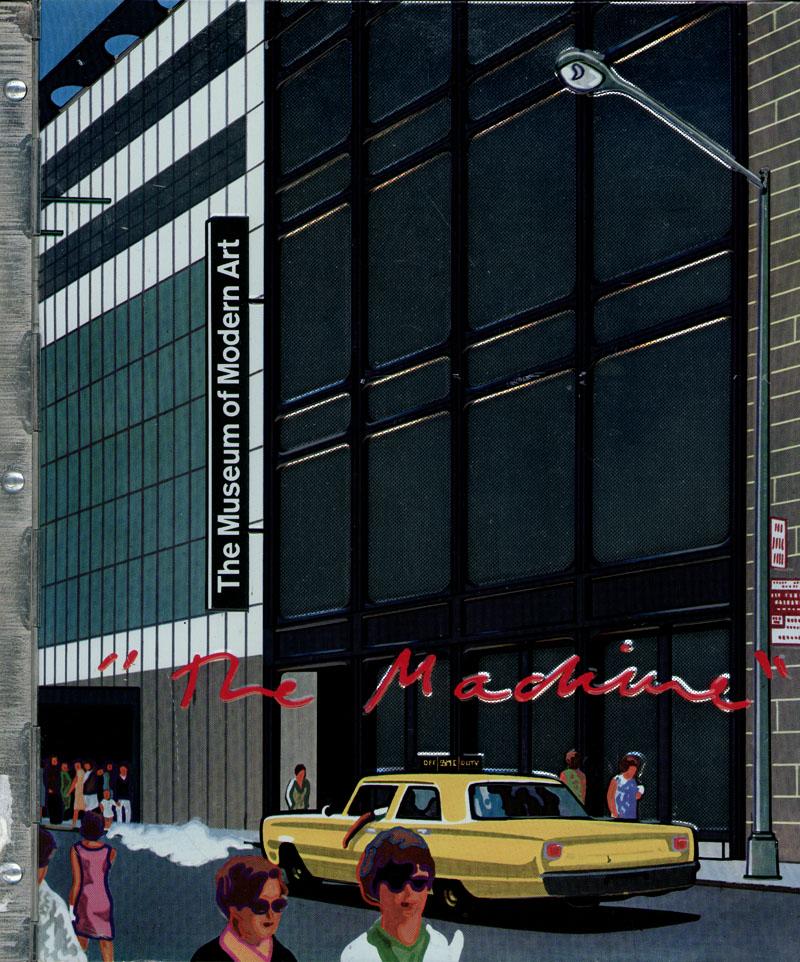
 curated by K.G. Pontus Hultén, November 1968 - February 9, 1969
put these in correct posts: Cybernetic Serendipity (ICA, curated by Jasia Reichardt, 1968); The Machine as Seen at the End of the Mechanical Age (MOMA, curated by K.G. Pontus Hulten, 1968); Software, Information Technology: Its Meaning for Art (Jewish Museum, New York, curated by Jack Burnham, 1970); Information (MOMA, curated by Kynaston McShine, 1970); and Art and Technology (LACMA, curated by Maurice Tuchman, 1970).
"Hulten remarks: "technology
today is undergoing a critical transition. . . . the mechanical
machine - which can most easily be defined as an imitation of our
muscles - is losing its dominating position among the tools of
mankind; while electronic and chemical devices - which imitate
the processes of the brain and the nervous system - are becoming increasingly important" (page 3).
[...] His (Hultén's) preferences include, in my opinion, the Dadaists, the Constructivists,
Charlie Chaplin and Jean Tinguely. This somewhat disparate collection of artists appears to be united - in Hulten's view - by their desire to dominate the mechanical world, to establish
better relations with machines so that a greater measure of humor, harmony and humanity might reign in our irrevocable marriage with technology.
[...] "The decisions that will shape our society in the future will have to be arrived at, developed, and carried out through technology. But they must be based on the same criteria of respect and appreciation for human capacities, freedom, and responsibility that prevail in art" (page I3).
"In planning for such a world, and in helping to bring it into being, artists are more important than politicians, and even than technicians" (page i).
[...] Nonetheless, he (Hultén) uses these symbols, and the application of "car" to Bugatti's La Royale (page I42), Fuller's Dymaxion Car (page I43) and Farhner's Boot Hill Express (page I8o) implies a simple distinction between "art" and "machine."
(from: William A. Camfield, The Machine as Seen at the End of the Mechanical Age by K. G. Pontus Hultén (review), The Art Bulletin, Vol. 53, No. 2, (Jun., 1971), pp. 275-277
Published by: College Art Association, Stable URL: http://www.jstor.org/stable/3048856)
No comments:
Post a Comment